 \n\n
\n\n
This month, Brazil’s Ministry of Tourism released a survey highlighting 11 municipalities renowned for their beautifully preserved colonial heritage. Now integrated into the official Brazilian Tourism Map, these captivating destinations feature architecture dating from the 16th to the 18th centuries. The initiative helps guide public policies and actively promotes travel to these guardians of the nation’s architectural legacy.
Several of the listed towns proudly hold the title of UNESCO World Heritage sites. Ouro Preto, nestled in the mountains of Minas Gerais, received this prestigious designation in 1980 for meticulously conserving its original urban layout from the gold-mining era. Just two years later, the vibrant historic center of Olinda, in Pernambuco, earned the same global recognition.
The federal guide also shines a spotlight on capital cities with ancient coastal and riverside landmarks. Salvador is home to the National Museum of Afro-Brazilian Culture and preserves the original urban grids from its time as the country’s first administrative capital. In the Amazonian gateway of Belém, Pará, the iconic Ver-o-Peso Market celebrates 398 years of continuous operation, fully protected by the National Institute of Historic and Artistic Heritage.
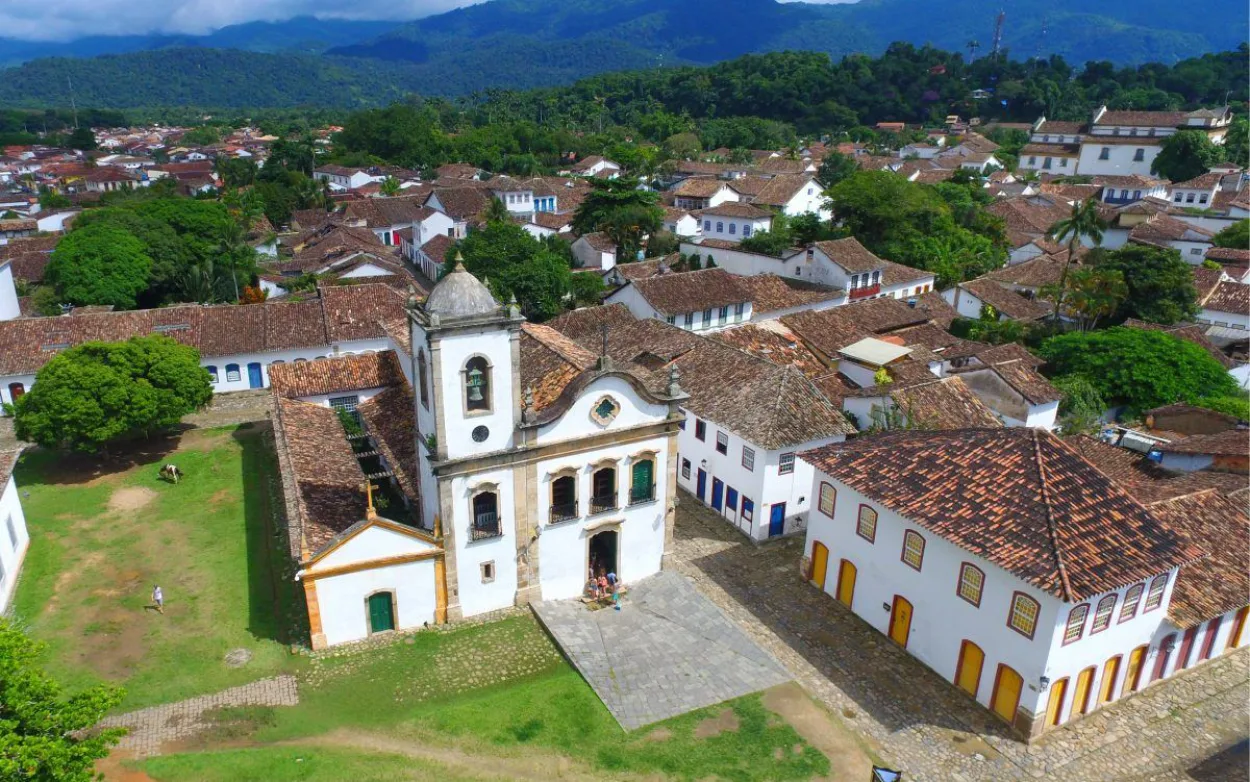
Beyond stunning civil and religious architecture, historical tourism in Brazil is brought to life by vibrant street festivals. Paraty, located on the breathtaking coast of Rio de Janeiro state, hosts the renowned International Literary Festival and keeps the traditional Festa do Divino alive. In the Amazon region, the city of Manaus welcomes a steady stream of visitors to the majestic Amazonas Theater, a neoclassical masterpiece inaugurated in 1896 during the golden age of the rubber boom.
To encourage travelers to explore these enchanting routes, the federal government is rolling out the Conheça o Brasil Voando (Discover Brazil Flying) program. This initiative aims to expand commercial flight routes, bridging major capitals with charming inland destinations. According to the Ministry of Tourism, boosting transport connectivity not only makes these historical treasures more accessible to international and domestic tourists alike, but also generates valuable jobs in the local service sectors.